Subjects





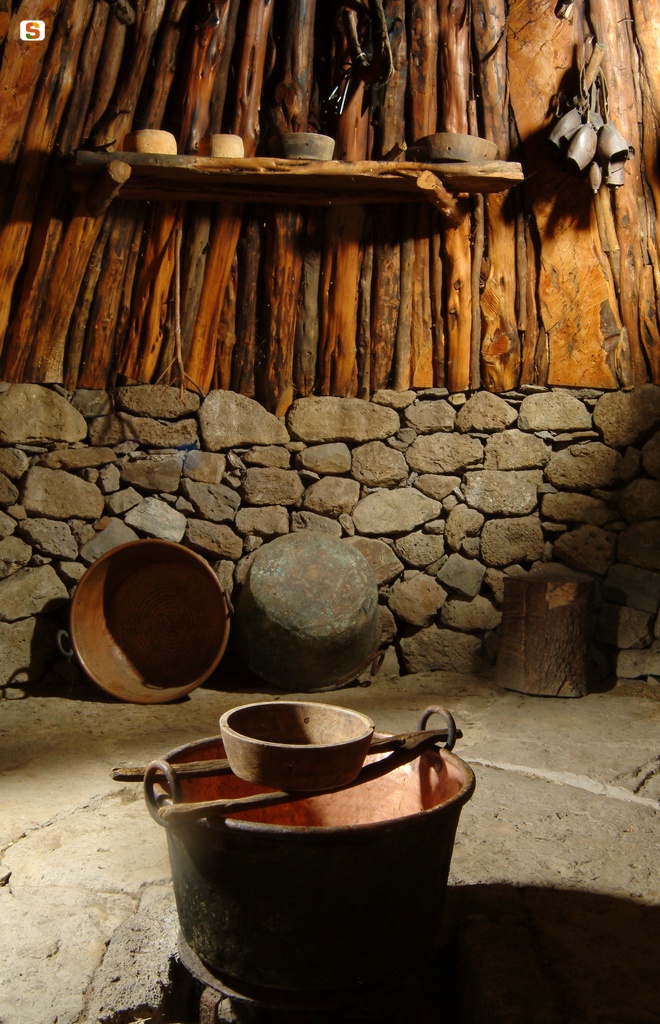
The S'Abba Frisca Museum Park, located in Dorgali in the heart of Barbagia, is an open-air ethnographic museum that tells the life, work and traditions of the Sardinian agro-pastoral civilization. Immersed in a suggestive natural environment, the park extends among centuries-old olive groves, water springs, vegetable gardens, woods and paths. The museum complex includes old rural houses, huts, ovens, oil mills and craft workshops, restored and furnished with original objects. Through exhibitions, practical demonstrations and thematic itineraries, the visitor can learn about traditional activities related to shepherding, agriculture, the processing of bread, cheese, iron and wood. S'Abba Frisca represents an important place for the protection and enhancement of local historical memory, offering an authentic cultural experience that combines material and intangible heritage, landscape and identity, and is today a reference point for the dissemination of traditional Sardinian culture
.Interventions funded with a PNRR Rural Architecture contribution
The intervention at the S'Abba Frisca Park Museum involved the renovation of the botanic garden and the recovery of traditional terraces to safeguard water sources and centuries-old olive groves. The “Classroom in the Park” has also been created, an open space intended for educational activities and cultural workshops. Some traditional structures in the area, including the ancient shepherd's hut and the cellar, have also undergone a conservative restoration of the roofs and interiors. Finally, the entire ethno-naturalistic path has been adapted to eliminate architectural barriers, ensuring better
Aspects of interest
The use of the S'Abba Frisca Park Museum is mainly aimed at rural and ethnographic tourism, with a strong cultural, educational and educational value. The park promotes knowledge of Sardinian agro-pastoral civilization, artisanal traditions and the relationship between man and the environment, offering a sustainable, identity and naturalistic tourism experience, aimed at visitors, schools and scholars. In 2026, the asset was highlighted by the insert of the main Spanish newspaper El Pais, El Viajero, in the list of the 10 best ecomuseums in
Usability: Open
Province: Nuoro
Common: Dorgali
Macro Territorial Area: Central Sardinia
POSTAL CODE: 08022
Telephone: +39 333 7655405
E-mail: sabbafrisca@gmail.com
Website: https://www.sabbafrisca.com/
Instagram: https://www.instagram.com/sabbafrisca/
Facebook: https://www.facebook.com/sabbafrisca
Information on tickets and access:
A calendar will be defined to fulfill the 12 days of free use provided by the PNRR to discover the assets and routes recovered with the intervention
The Museum Park for a fee follows the following times:
January — March: every day by reservation.
April and May: open every day from 11:00 to 16:00.
June — September: open every day from 10:00 to 18:00.
October: open daily from 11:00 to 16:00.
November and December: every day by reservation
Access mode: For a fee
Tickets :
Services information: Il Parco Museo S'Abba Frisca adotta diverse misure per garantire la fruibilità del suo percorso etno-naturalistico: Accessibilità Fisica: Il sito è dotato di parcheggi riservati, ingresso e servizi igienici accessibili in sedia a rotelle. Il percorso di visita è pianeggiante, privo di barriere architettoniche significative e adatto anche a passeggini e persone con ridotta capacità motoria. Accessibilità Sensoriale: L'esperienza è fortemente immersiva e basata sul contatto diretto con la natura (cascate, piante della macchia mediterranea) e gli animali della fattoria. Sono disponibili visite guidate in più lingue (italiano, inglese, francese) che favoriscono la comprensione del patrimonio. Accessibilità Cognitiva: Il percorso è studiato per essere semplice e lineare, rendendo la storia delle tradizioni sarde facilmente comprensibile a bambini e scolaresche.
Update
Where is it
Dorgali, Parco Museo S'Abba Frisca Images number: 4
Attachments
Texts

Author : Convegno Prodotti dal Parco < 2001
Year : 2002
Author : Lise, Alessandro
Year : 2020
Results 2 of 907850
View All
Video


 Facebook
 Twitter
 LinkedIn
 Whatsapp

 Print
 E-mail
 CARD PNRR AR_ Dorgali Parco Museo S'Abba Frisca

Comments